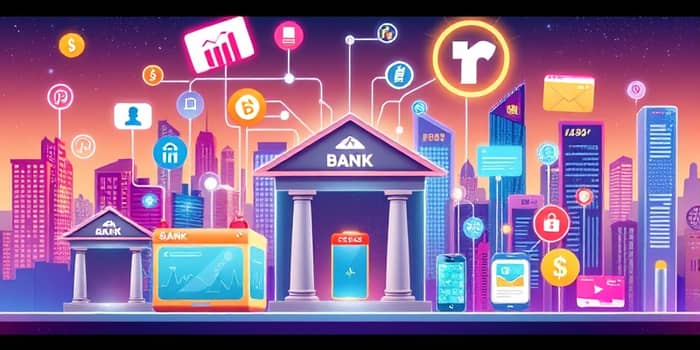
The financial services industry stands at the cusp of a revolution driven by the interconnected ecosystem of API providers. As banks, fintechs, and digital platforms converge, APIs act as the glue that binds them, enabling new experiences and unlocking unprecedented opportunities. In this article, we explore how the API economy is transforming finance, share real-world examples, and offer practical guidance for organizations eager to harness its power.
The term “API economy” describes the strategies, business models, and platforms built around Application Programming Interfaces. At its core, it involves rapid integration of new digital products by exposing and consuming APIs to share data and functionality seamlessly. For financial services, this means banks can expose account data, payment capabilities, and credit insights to third parties, enabling innovative offerings without reinventing the infrastructure.
APIs serve as intermediaries, translating requests between disparate systems. This modular approach lets organizations assemble services like building blocks, accelerating time-to-market and fostering collaboration across an extensible API foundation compliant with regulations.
In practice, APIs power everything from instant payments to portfolio management. They allow fintech startups to plug into legacy banking systems without lengthy proprietary integrations, and enable banks to offer white-label solutions through Banking-as-a-Service platforms. This synergy drives both innovation and inclusivity, opening financial services to underbanked populations via embedded interfaces in non-financial apps.
Key functions facilitated by financial APIs include:
This structure enables organizations to focus on customer experience rather than rebuilding core functionality. By leveraging modular, scalable API integrations, teams can iterate rapidly and respond to market demands with agility.
Across the globe, organizations are harnessing APIs to overhaul traditional banking and financial models:
• Neobanks leverage cloud-native APIs to offer digital-only accounts, instant card issuance, and integrated budgeting tools—all without physical branches.
• Payment processors like Stripe and Square provide developer-friendly APIs that power e-commerce, marketplaces, and subscription platforms, enabling merchants to integrate payments in minutes.
• Personal finance apps aggregate multi-institution data via open banking, delivering holistic dashboards and AI-driven spending insights to end users.
• Insurtech firms use usage-based insurance APIs to track real-time behavior, dynamically adjusting premiums and automating claims with minimal human intervention.
Global fintech investment reached $113.7 billion in 2023, reflecting surging confidence in digital-first financial models. Open banking initiatives in the EU and UK have already unlocked billions in transaction value, with more regions planning similar mandates. Major technology players—Oracle, Microsoft, and Stripe—are investing heavily in API platforms, cementing the trend toward platform-based finance.
Regulations like PSD2 and the UK’s CMA order compel incumbent banks to provide secure, standardized APIs, accelerating adoption. Meanwhile, consumer demand for omnichannel financial experiences pushes institutions to innovate or risk obsolescence.
Embedding financial services into non-financial customer journeys is emerging as the next frontier. Retailers can offer point-of-sale financing, ride-sharing apps can integrate instant driver payouts, and SaaS platforms can deliver invoicing and banking features natively. These models rely on embedded financial services through APIs and are expected to drive the next wave of revenue growth.
Platformization transforms traditional banks into ecosystems, enabling third-party developers to create value-added services on top of core banking infrastructure. This shift fosters a modular, collaborative, and ecosystem-driven future where products are assembled from best-in-class services rather than built in isolation.
Organizations ready to embrace the API economy should consider the following steps:
• Establish a robust API governance model that addresses security, versioning, and lifecycle management.
• Invest in developer experience, offering comprehensive documentation, sandbox environments, and clear support channels.
• Adopt industry standards where possible, and contribute to open frameworks to foster interoperability.
• Launch a marketplace or partnership program to monetize APIs and engage external developers.
• Create internal sandboxes and innovation labs to prototype new offerings rapidly, incorporating user feedback at every stage.
By following these best practices and investing in an extensible API platform architecture, financial institutions and fintechs can build sustainable competitive advantages and deliver meaningful value to customers.
The API economy is more than a technological trend—it represents a fundamental shift in how financial services are conceived, delivered, and monetized. By leveraging APIs as strategic assets, organizations can unlock new growth opportunities, enhance customer experiences, and drive financial inclusion.
Now is the time for banks, fintechs, insurers, and every stakeholder in the financial ecosystem to embrace monetization through APIs and marketplaces, invest in secure and scalable platforms, and build collaborative partnerships. In doing so, they will not only thrive amid digital transformation but also shape the future of finance for generations to come.
References