Raw materials lie at the heart of every economy, fueling industries from energy to agriculture. As global dynamics shift, investors seek assets that not only deliver returns but also anchor portfolios against volatility.
In this comprehensive guide, we explore why commodities deserve a central role, review their current outlook, and detail strategies that can help you harness their potential.
Commodities are basic goods used in commerce that can be exchanged for identical items without quality differences. Their fungibility underpins global trade, making them a fundamental cornerstone of investment diversity.
They fall into two main categories:
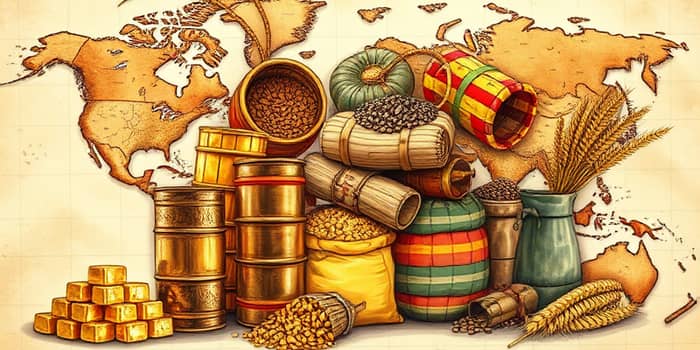
Hard commodities are extracted or mined from the earth. They include oil, natural gas, and metals such as gold, copper, and lithium. These resources often drive industrial growth and the energy transition.
Soft commodities are agricultural products. Wheat, coffee, soybeans, and cocoa represent crops cultivated seasonally. Their supply and price dynamics depend on weather, crop yields, and geopolitical policies.
Investing in raw materials offers unique advantages that complement traditional equity and bond holdings:
As of mid-2025, global commodity prices have faced downward pressure. After a 14% drop in 2023, they climbed just 2% in 2024 and are forecasted to fall by 1% in 2025. Projections vary, with some indexes predicting up to a 12% decline over the next year.
Key volatility drivers include:
Geopolitical risk—Sanctions, conflicts, and OPEC+ supply decisions can trigger sudden price swings. Interest rates, especially in the U.S., influence the dollar’s strength, making commodities more expensive for foreign buyers and dampening demand.
Supply chain disruptions still linger post-pandemic, while climate change affects agricultural yields through extreme weather events. Finally, trade policies, carbon pricing, and green-energy mandates reshape supply-demand balances.
Understanding each sector’s trajectory helps investors pinpoint opportunities and manage risks. The table below summarizes the 2025 forecasts and strategic considerations:
A variety of instruments allow exposure to raw materials, each with its own risk-return profile:
Commodities can be more volatile and complex than stocks or bonds. Key risks include:
Several powerful trends are shaping commodity markets through 2025 and beyond. The push toward decarbonization fuels demand for critical minerals like lithium, cobalt, and copper—essential for batteries and renewable energy infrastructure.
Digitalization in trade finance is streamlining transactions, reducing costs, and opening new financing pathways. ESG considerations are driving investments in sustainable agriculture and low-carbon fuels, while China and India continue to dominate demand cycles for oil, metals, and grains.
Understanding futures market mechanics—contango versus backwardation—can also enhance returns or mitigate costs for rollovers in ETFs and managed futures strategies.
Raw materials remain a dynamic and essential asset class, offering both diversification and inflation protection. By combining sector insights, prudent vehicle selection, and awareness of macro drivers, investors can build a resilient commodity allocation that stands firm in varied market climates.
As the global economy evolves—driven by energy transitions, technological advances, and changing consumption patterns—commodities will continue to serve as the cornerstone of balanced portfolios seeking both stability and growth.
References