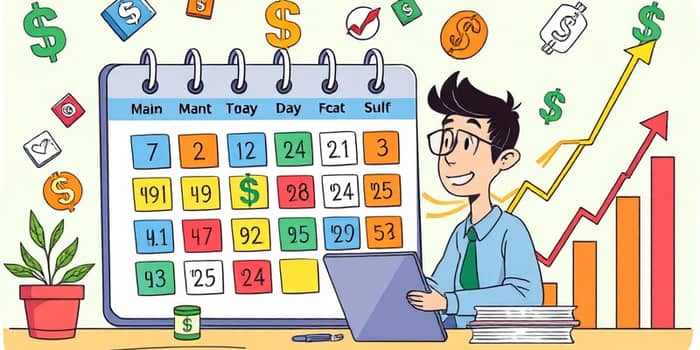
In a world where financial surprises can strain your peace of mind, having a clear, day-by-day view of your bank balance can be transformative.
By mapping every dollar on a calendar, you move from uncertainty to planning with confidence and control.
A cash flow calendar is a calendar-based tool where you record all income and expenses on the exact dates they occur.
It shows exactly when money comes in and goes out, giving you a day-by-day bank balance and helping you spot shortages before they happen.
You can use paper, a spreadsheet, your digital calendar, or a dedicated budgeting app—whatever you’re most likely to maintain.
This visual schedule shifts you from guessing your spending power to seeing the answer on a calendar grid, so you can plan your next move.
It is perfect for:
Knowing your total income and expenses is helpful, but knowing when they hit your account is vital to avoid cash shortages.
With a cash flow calendar, you gain these key benefits:
These outcomes stem from making cash flow patterns visible, reducing anxiety and empowering you to take meaningful action.
Many people confuse a budget with cash flow. A budget is a plan for how much you intend to spend and save each month, but it doesn’t reflect timing.
Cash flow tracks the actual timing and amount of inflows and outflows—when money hits or leaves your account.
A cash flow calendar merges budget and timing into a single visual schedule, highlighting gaps between paydays and bill due dates so you can adjust ahead of time.
By using this tool, you avoid a balanced budget on paper that still leaves you scrambling mid-month.
Select a medium that fits your routine. Here’s a quick comparison:
You can also adopt specialized strategies, such as a Bill-Matching Calendar to align bills with paydays, or a Zero-Based Cash Calendar to assign every dollar a job before it arrives.
Follow these steps to create a sustainable cash flow calendar:
Begin with your current bank balance at the top so each day’s entries project your future balance and alert you to potential shortfalls.
Use color coding—green for income, red for bills, blue for savings—to highlight critical patterns. Reschedule or trim expenses when a low-cash day appears.
On paper, use pencil or sticky notes; digital calendars offer automated reminders for recurring entries.
Maintain your calendar by updating it weekly. Reconcile actual transactions and refine projections to keep the tool accurate and trustworthy.
Over time, you’ll identify recurring tight spots and can negotiate due dates, adjust spending, or boost your savings to smooth your cash flow.
Many beginners forget to update the calendar or overlook variable expenses, causing the tool to lose its predictive power.
Combat this by living in your calendar view daily, setting reminders to reconcile transactions, and immediately slotting in unplanned costs to adjust future projections.
A cash flow calendar is more than a budgeting tool—it’s a mindset shift that delivers foresight, freedom, and flexibility in managing your money.
Whether you choose paper, spreadsheet, or an app, consistency is key. Fill in your calendar, review it regularly, and adjust as life and finances evolve.
Embrace this simple yet powerful habit and step confidently toward a future free of mid-month stress and surprise shortfalls.
References