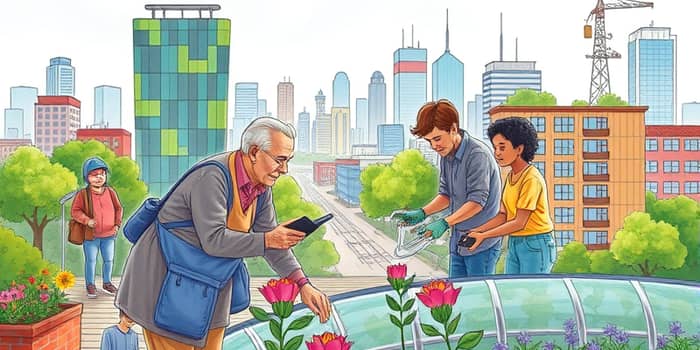
Our world stands on the precipice of profound transformation as population dynamics evolve at an unprecedented pace. With global growth slowing and birth rates falling below the replacement level of 2.1 children per woman in dozens of countries, leaders, investors, and communities must adapt. The shifting balance between youth and elderly populations presents challenges and opportunities that will define economic prosperity and social cohesion over the coming decades.
By 2025, the planet reached an astonishing 8.2 billion people, yet fertility rates in major economies—including the US, China, and much of Europe—have dipped beneath the critical threshold needed to sustain current population levels. Projections indicate a peak of 9.7 billion by 2050, followed by contraction in many regions. Nearly half of future growth will concentrate in nine countries: India, Nigeria, Pakistan, the DR Congo, and others, with the US the lone Global North contributor.
At the same time, we face a historic pivot toward longevity. The global cohort aged 65+ will outnumber those under 18 by 2080, and Asia will house 60% of the world’s seniors by 2060. The World Health Organization anticipates the population aged 60+ to nearly double from 1.1 billion in 2023 to 2.1 billion by mid-century, with an especially sharp rise among those over 80. Regions such as Japan, Spain, and parts of Europe already grapple with a “demographic trap”—one example: Austria forecasts only two working-age individuals per retiree by 2042, straining pensions and social support.
Contrasting this, sub-Saharan Africa experiences the opposite phenomenon—a youth bulge that could double the population in countries like Niger, Uganda, and Malawi by mid-century. These nations hold enormous potential but face intense pressure to generate employment, education, and infrastructure at scale. The global population pyramid morphs into an “obelisk,” its base narrowing even as its summit swells.
These demographic winds act as headwinds to global growth. Shrinking labor forces in dozens of nations will curb productivity gains, drive up public debt-to-GDP ratios, and create unsustainable burdens on healthcare and pension systems. Over 86% of employers expect AI and data analytics to reshape sectors, promising 170 million new roles by 2030 even as 92 million jobs are displaced. Skills gaps widen as older workers retire and younger entrants face automation, deepening inequalities by age and gender.
Understanding the multidimensional impact is critical. The table below summarizes key areas under strain:
Amid challenges lie vast markets waiting to be harnessed. The so-called longevity economy driving demand for health and wellness spans age-tailored finance, caregiving, and leisure. Meanwhile, youthful regions represent untapped sources of talent and consumer growth. Savvy investors and businesses can capitalize on these demographic shifts by focusing on strategic sectors:
Governments and multilateral institutions must act decisively to transform demographic pressures into engines of prosperity. The following strategies provide a roadmap for sustainable development:
Demographic change does not occur in isolation. Its intersection with geopolitical, technological, and environmental shifts amplifies both opportunity and risk. Youth bulges in fragile states can escalate instability without sufficient job creation, while aging societies may face social cohesion challenges. Climate change and resource scarcity heighten vulnerability where populations expand fastest. Meanwhile, green transition and AI-driven workforce transformations demand agility from both public and private sectors.
By embracing a holistic approach—integrating health, education, technology, and sustainability—societies can harness the combined wisdom of older generations with the creativity of youth. This synergy will be the cornerstone of inclusive growth in the coming decades.
The demographic landscape of the twenty-first century offers a dual narrative: one of strain and another of promise. As populations age in some regions and boom in others, the choices made by policymakers, investors, and communities will shape our shared destiny. By aligning capital with purpose, fostering dynamic youth bulges spurring innovation potential, and investing in the rapidly aging global population over 65, we can secure resilient economies and vibrant societies.
Now is the moment to weave demographic insight into every strategy—transforming statistical forecasts into actionable plans. With collaboration, creativity, and courage, we can turn population trends into a powerful force for positive, equitable progress worldwide.
References