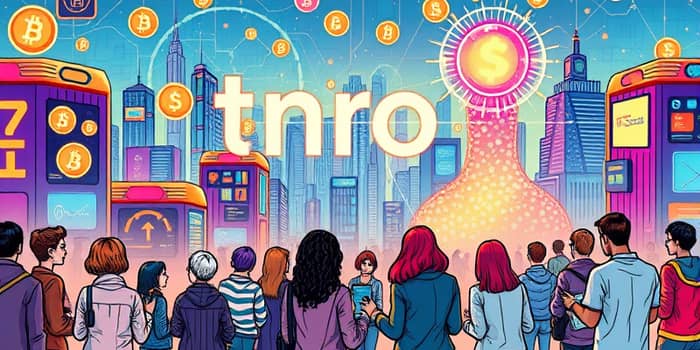
The financial world is on the cusp of a profound transformation, driven by technology that promises to reshape how we invest, save, and grow our wealth.
By 2026, these innovations will not only enhance efficiency but also democratize access, making finance more inclusive and responsive than ever before.
AI integration and blockchain are at the heart of this shift, enabling real-time decisions and fractional ownership that were once unimaginable.
As we look ahead, understanding these trends is crucial for anyone seeking to navigate the evolving landscape and secure their financial future.
Artificial intelligence is no longer a distant concept but a practical tool revolutionizing every aspect of finance.
From banking operations to investment advice, AI agents and generative AI are enhancing decision-making and reducing costs.
Over half of under-50 consumers will use AI for financial guidance by 2026, such as obtaining mortgage rates through personal agents.
This shift empowers individuals with tailored insights, making complex financial products more accessible.
Key applications of AI in finance include:
Finance leaders are leveraging AI for rolling forecasts and narrative insights, with over 70% of CFOs owning data and AI strategies.
This human-AI collaboration defines new workflows, ensuring that data quality differentiates success in a competitive market.
Embedded finance integrates banking services directly into non-financial platforms, blurring the lines between everyday apps and financial management.
Imagine securing a loan within a rideshare app or making investments through a retail platform—this is the future we are stepping into.
The market is projected to surpass $138 billion in 2026, with analysts forecasting it to reach $7 trillion by 2030.
In Europe alone, embedded finance revenues could exceed €100 billion by 2030, driven by tech giants and fintech partnerships.
Examples of embedded finance in action include:
This trend risks traditional banks becoming invisible infrastructure, but it also opens new channels for customer engagement and growth.
Tokenization converts physical assets like bonds, real estate, and funds into digital tokens on blockchain networks.
This process enables fractional ownership, faster settlement, and enhanced transparency, making high-value investments accessible to a broader audience.
Big banks and asset managers are already issuing tokenized money-market funds and fixed-income securities, moving from hype to mainstream adoption.
With 24/7 trading and reliable custody solutions, tokenization unlocks liquidity and reduces barriers for younger and underserved investors.
The benefits of tokenized assets include:
As this trend gains momentum, it will reshape portfolio diversification and risk management strategies.
In today's fast-paced world, instant payments are becoming the standard for businesses and consumers alike.
Real-time settlement infrastructure provides immediate liquidity and cash-flow certainty, essential for B2B transactions, payroll, and digital marketplaces.
This core requirement complements tokenized assets, ensuring that financial systems operate seamlessly and efficiently.
Speed imperative drives innovation, with expectations for real-time everything shaping consumer behavior and investment flows.
Key aspects of this infrastructure are:
By 2026, this shift will reduce friction in financial interactions, empowering investors to act quickly on opportunities.
As technology advances, regulators are adapting to balance growth with compliance, introducing smarter regulations that foster innovation.
Over 130 countries are piloting central bank digital currencies (CBDCs), such as the UK's digital pound and EU's digital euro, enabling instant payments and cross-border transfers.
Stablecoins and CBDCs risk eroding traditional bank deposits, but they also offer new avenues for financial inclusion and efficiency.
Banks must evolve by issuing stablecoins or serving as intermediaries in this digital currency ecosystem.
Regulatory-driven trends include:
This regulatory landscape encourages responsible innovation, ensuring that financial systems remain secure and equitable.
Data analytics and AI are enabling hyper-personalized financial services, tailored to individual needs and preferences.
This appeals particularly to Gen Z and Millennials, with 91% of Millennials using fintech and 68% of Gen Z preferring it over traditional banks by 2026.
Banks prioritizing personalization will increase from 27% in 2024 to 35% in 2025, focusing on financial wellness and spending insights embedded in apps.
In North America, 90% of people use digital payments, and over 50% of younger generations rely on digital wallets for daily transactions.
Strategies for inclusive growth involve:
This trend not only drives customer retention but also fosters a more equitable financial ecosystem.
Navigating this evolving landscape requires a proactive approach to leverage emerging opportunities and mitigate risks.
Investors should focus on building diversified portfolios that incorporate tokenized assets and AI-optimized strategies.
Winners in this space will be those who embrace ecosystems and partnerships, while laggards risk losing ground to fintech and tech giants.
With a positive macroeconomic backdrop, including potential rate cuts, the time is ripe for innovation and growth.
Key actions for investors include:
By staying informed and adaptable, investors can harness these trends to achieve long-term financial success.
As we move forward, the integration of these technologies will create smart, reliable systems that benefit everyone.
The future of finance is digital-first, customer-obsessed, and ecosystem-oriented, offering unprecedented opportunities for growth and inclusion.
By embracing change and focusing on practical applications, we can shape a financial world that is not only efficient but also empowering for all.
References