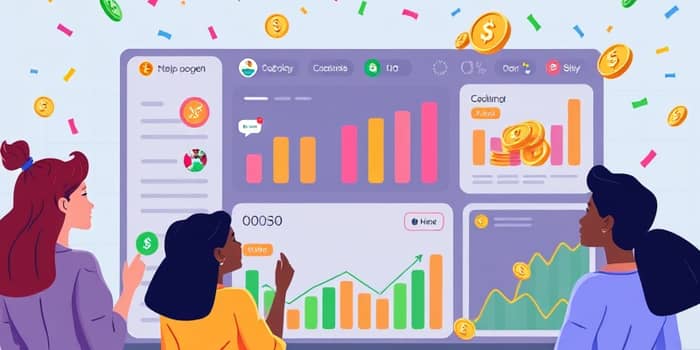
The world of financial services is undergoing a transformation, driven by the integration of playful elements into everyday money management. By weaving game mechanics into apps and platforms, financial institutions can foster deeper connections, boost engagement, and guide users toward healthier habits. This article explores how gamification is reshaping the industry and empowering a new generation of customers.
Over the last decade, the global gamification market growth in fintech has exploded from roughly $4.91 billion in 2016 to nearly $12 billion in 2021. Forecasts project this figure surging past $48.7 billion by 2028, underscoring its immense potential. Institutions adopting these strategies report remarkable results: one leading bank in Brazil achieved a 46% rise in recurring profits and generated an additional $1.06 billion in revenue simply by embedding game mechanics into its mobile app.
Beyond headline figures, customers themselves reap significant benefits. Studies show that gamified savings solutions can increase users’ savings by 22% and boost engagement rates by up to 150%. This dual impact—better outcomes for both businesses and individuals—drives the rapid adoption of playful design across budgeting, investing, and financial education tools.
At the heart of gamification lie familiar features: points, badges, streaks, progress bars, and narrative arcs. These tools transform routine tasks into rewarding experiences. For example, progress bars allow users to track savings milestones visually, while streak counters encourage daily budgeting habits.
Leaderboards can be deployed cooperatively or competitively, fueling healthy rivalry among friends or community members. Narrative elements—such as building a virtual city with each expense—engage the imagination and foster sustained commitment. Meanwhile, instant rewards and surprise bonuses reinforce positive behaviors and prevent drop-off.
Leading fintech and banking apps demonstrate the power of these mechanics:
Gamification delivers measurable gains across multiple dimensions:
These outcomes translate into bottom-line impact. One major bank reported a 46% boost in recurring profits and an additional $1.06 billion in revenue after launching its gamified platform. Another saw deposit values climb by 32% when users engaged with credit-simulation features.
While gamification can unlock tremendous value, it carries potential pitfalls. Excessive reliance on extrinsic rewards may undermine users’ intrinsic motivation over time. Similarly, overly complex systems risk alienating older or less tech-savvy customers.
From a regulatory standpoint, institutions must design transparent and ethical reward systems to avoid gambling-like dynamics or misleading incentives. Clear disclosures, fair terms, and data privacy protections are essential to maintain trust and comply with evolving standards.
Looking ahead, gamification will become increasingly personalized. AI-driven insights can tailor challenges, rewards, and learning modules to each user’s preferences and financial behavior. Blockchain and decentralized finance open doors to NFT-based achievements and tokenized incentives, offering novel ways to reward engagement.
Expansion beyond traditional banking into insurance, mortgages, and employee training promises to extend gamification’s benefits across the financial ecosystem. Organizations that embrace these trends early will not only engage customers more deeply but also foster a culture of continuous learning and empowerment.
By harnessing the principles of play, financial institutions can bridge the gap between complex products and real human aspirations. Gamification offers a path to transform passive users into active participants in their own financial wellness journey, making money management not just necessary, but truly enjoyable.
References