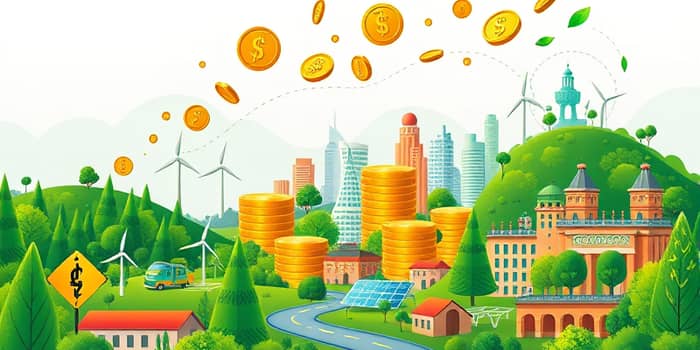
In an era defined by climate urgency, green finance emerges as a powerful catalyst for change.
It bridges the gap between economic growth and environmental stewardship, offering hope for a sustainable world.
structured financial activities for better environmental outcomes are reshaping global investment landscapes.
This transformative approach empowers individuals and institutions to make a tangible impact.
Green finance encompasses all financial activities that prioritize environmental benefits.
It includes loans, bonds, and investments designed to support eco-friendly projects.
From renewable energy to biodiversity conservation, the scope is vast and impactful.
sustainable development and climate resilience are at its core, driving innovation worldwide.
Unlike traditional finance, it integrates long-term environmental goals into every transaction.
This holistic approach ensures that progress benefits both people and the planet.
Several innovative instruments are propelling the green finance revolution forward.
They provide accessible ways to channel capital into sustainable initiatives.
These instruments are not just financial tools; they are vehicles for positive change.
By investing in them, you contribute directly to a greener economy.
The green finance market is experiencing unprecedented expansion globally.
Current valuations and future projections highlight its immense potential.
This growth underscores a shift towards sustainable economic models that prioritize the environment.
Investors are increasingly recognizing the financial and ecological rewards.
Multiple factors are accelerating the adoption of green finance worldwide.
Understanding these drivers can help you seize opportunities in this field.
These drivers create a fertile ground for innovation and investment.
They ensure that green finance remains a dynamic and evolving sector.
Green finance is gaining traction across different regions with unique strengths.
Europe leads with robust regulations and incentives for renewable energy.
The U.S. is advancing in areas like solar power and sustainable finance.
Countries like China and France are top issuers of green bonds globally.
global efforts are converging towards common environmental goals.
This regional diversity enriches the global ecosystem of green finance.
It demonstrates that sustainability can thrive in various economic contexts.
Green finance is applied across diverse sectors to drive tangible outcomes.
It offers practical solutions for businesses and communities alike.
By targeting specific industries, green finance maximizes its environmental impact.
It transforms theoretical concepts into actionable projects that benefit society.
Despite its promise, green finance faces hurdles that require attention.
Addressing these challenges is key to its long-term success.
Looking ahead, several trends are shaping the future of green finance.
These trends highlight the sector's maturation and ongoing innovation.
They offer exciting opportunities for investors and professionals alike.
Green finance is not just for large institutions; it is accessible to everyone.
By making informed investment choices, you can contribute to a healthier planet.
investing in green finance is investing in our collective future.
It empowers you to align your financial goals with environmental values.
Start today by exploring sustainable options in your portfolio or community.
Together, we can build a world where finance fuels both prosperity and sustainability.
References