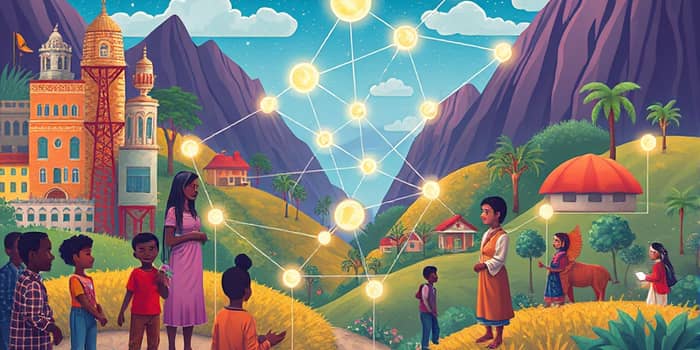
In the modern era, connectivity is no longer a luxury—it is the lifeline of education, healthcare, and economic empowerment. Yet in 2025, millions remain on the wrong side of the digital chasm, unable to seize the full benefits of our interconnected world.
Bridging this gap demands more than infrastructure alone; it calls for a holistic approach that unites governments, private sectors, and communities in a shared vision of equitable digital access.
Originally coined to describe the gulf between those with and without internet access, the digital divide has evolved into a complex, multi-dimensional challenge. Today, it encompasses not only connectivity but also device ownership, digital literacy, and the quality of engagement in essential online services.
Post-pandemic realities reinforced that reliable connectivity is as vital as electricity or water. From telemedicine appointments to remote classrooms, millions discovered that even basic 3G speeds or borrowed devices often fall short.
As of 2025, experts define the divide by five core pillars: connectivity reliability, affordability, device capabilities, skills and literacy, and relevant local content and services.
Global progress in 2025 shows both hope and hurdles. While three-quarters of humanity now enjoys some form of online access, billions remain offline, with stark disparities between low- and high-income regions.
In the United States, the narrative is equally nuanced. Despite 95% terrestrial broadband coverage, adoption lags in remote, rural, and tribal communities due to cost, device shortages, and skill barriers.
Several entrenched obstacles continue to block progress, deepening inequality and limiting opportunity.
The digital divide is not an abstract concept—it has immediate consequences for families, businesses, and entire regions. Lack of access stunts economic growth, restricts educational attainment, and exacerbates social isolation.
Workers without digital skills face limited job prospects; students miss vital learning opportunities; seniors miss telehealth visits and social connections. Over time, these gaps can entrench poverty cycles and hinder nationwide innovation.
Transformative solutions must address all facets of the divide, ensuring meaningful universal digital participation for every individual.
Key approaches include:
In India, 85% of households own smartphones, but rural digital literacy programs have accelerated uptake of government and health services. Across Africa, solar-powered community centers offer free Wi-Fi and basic computer skills training.
In the U.S., tribal communities are leveraging local leadership councils to deploy broadband cooperatives, while urban libraries partner with nonprofits for device loans and coding camps.
These examples show that when vision aligns with action, communities can turn technology from a barrier into a springboard for opportunity.
Bridging the digital divide is more than closing a connectivity gap—it is about empowering every person to thrive in a digital age. By prioritizing holistic solutions, fostering cross-sector collaboration, and centering human needs, we can transform this challenge into a catalyst for inclusive growth.
The road ahead requires sustained commitment and bold innovation. Let us unite around the shared belief that no one should be left offline, and that every human deserves the chance to participate fully in our digital future.
References