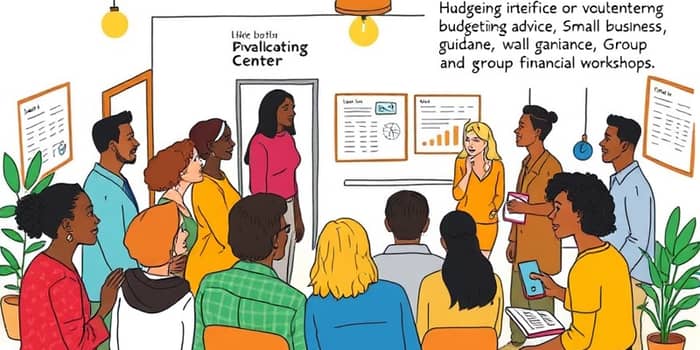
In today’s economy, fewer than 30% of Americans achieve true financial health. Many individuals and families struggle with daily expenses, unexpected emergencies, and mounting debt.
Community organizations step in as pillars of strength, offering short-term debt management solutions and vital resources to those who need them most.
Recent surveys reveal that almost 80% of respondents rate financial stability within low- to moderate-income (LMI) populations as poor or very poor. Credit conditions follow a similar trend, with 63% describing them negatively.
Looking ahead, most expect conditions to worsen by 2026. The top concerns include cost of living (46%), incomes not keeping pace with expenses (24%), and reliance on alternative financial services like payday loans (16%).
The nonprofit sector and community development financial institutions (CDFIs) act as economic first responders. They deliver long-term financial coaching and planning, counsel households on budgeting, and facilitate access to safe banking options.
Despite financial stress—reported by 52% of LMI-serving organizations—and rising demand for services, nearly three-quarters of CDFIs saw increased requests in 2024, anticipating continuation into 2025.
Organizations and individuals identify both opportunities and obstacles in the current landscape. The table below highlights top factors impacting financial stability and credit.
Understanding these dynamics allows community organizations to tailor programs and policymakers to craft more effective supports and interventions.
In New York, a low-income family received nonprofit financial coaching, enabling them to pay rent on time and maintain stable housing through a full year of rising costs.
On the island of Puerto Rico, a small-business owner accessed free expert small business guidance to secure capital, expand operations, and hire local staff despite economic uncertainty.
In South Florida, veterans and their families worked with local groups to develop budgets and savings plans, overcoming individual crises and preparing for future financial shocks.
GROW South Dakota launched remote coaching for rural residents, ensuring that isolated communities benefit from the same support networks as urban centers.
Operation HOPE in Los Angeles provided financial education and recovery strategies after wildfires, while the Washington Area Community Investment Fund (WACIF) delivered technical assistance to entrepreneurs in underserved neighborhoods.
Neighborhood Housing Services of Southern Nevada helped prospective homebuyers improve credit scores and navigate first-time purchase programs within affordable housing developments.
Taking proactive steps can position you for success, even in challenging economic times. Consider the following:
By combining personal discipline with community-driven resources, you can cultivate long-term financial resilience and independence.
Major initiatives are amplifying support across the nation. The Citi Foundation Community Finance Initiative awarded $15 million to 60 organizations in 2025, bolstering staff training and expanding financial coaching capacity.
Federal Reserve surveys such as the Community Perspectives Survey and the Community Conditions Survey provide crucial data for decision-makers, while the CDFI Fund supports institutions bridging gaps left by traditional banking.
Community banks continue to play a vital role, reporting net income growth and steady loan and deposit increases, signaling confidence in localized financial ecosystems.
As individuals, nonprofits, financial institutions, and policymakers collaborate, we can build comprehensive community-driven support networks that uplift every member, foster economic opportunity, and ensure that no one faces financial challenges alone.
Join your local community organization, share your experiences, and contribute to a collective effort that transforms individual struggles into shared successes. Together, we unlock the full power of community in every financial journey.
References