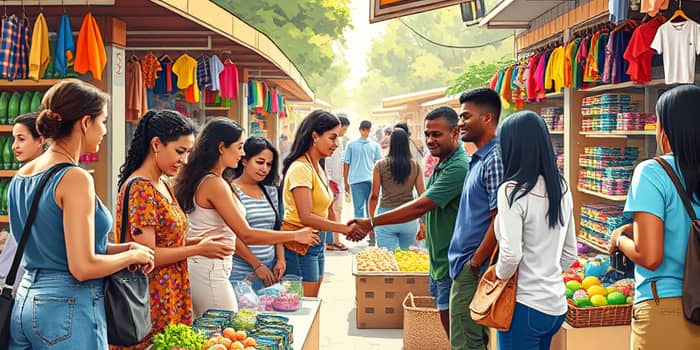
Whether you're a small business owner, freelancer, or thrifty consumer, bartering offers a powerful alternative to your cash-driven lifestyle. We'll explore the steps, strategies, and real-world examples you need to swap goods and services confidently and secure meaningful value without spending cash.
Bartering is the direct exchange of goods or services for other goods or services, bypassing traditional currency. At its core, each party negotiates a trade they consider fair, creating a mutual benefit. This form of trade can be bilateral between two individuals or multilateral through barter networks.
Unlike a monetary economy, bartering eliminates the need for money as a medium of exchange. Instead, it relies on trust, communication, and the perception of value. By focusing on what you need and what you can offer, you can unlock creative ways to meet your needs without touching your bank account.
Bartering predates the invention of currency. In early agricultural societies, people swapped items such as grain for tools or livestock for textiles. This pre-money economy laid the groundwork for human trade.
The classical challenge of bartering was the "double coincidence of wants," requiring each party to possess precisely what the other desired. This inefficiency spurred the creation of commodity money and eventually modern fiat currencies, which solved issues of divisibility, portability, and standardized valuation.
In the 20th century, organized barter exchanges emerged. Companies began trading through networks that used trade credits in place of cash, easing transactions during economic downturns. Today, digital barter platforms, local time banks, and community exchange systems have revitalized this practice in the 21st century.
Bartering remains relevant, especially when cash flow is tight or credit dries up. During recessions or regional currency crises, barter networks can provide a lifeline for businesses and individuals alike.
According to the International Reciprocal Trade Association, over 300,000 US businesses participated in barter transactions in the early 2000s, driving more than $8 billion in trade annually. Globally, this organized barter industry continues to grow, offering access to new markets and helping to monetize idle resources.
Modern bartering takes several forms. The table below highlights the main models:
Informal bartering is a one-to-one swap of goods or skills, often arranged among friends, neighbors, or through community groups. It depends on mutual trust and negotiation to align needs.
Time banks and local currencies allow participants to earn credits for providing services, then spend those credits within the same network. This approach strengthens local economies and communities and promotes equitable value exchange.
B2B bartering lets businesses trade excess inventory, ad space, or professional services. It enhances cash flow management and builds strategic partnerships without the need for bank loans.
Organized barter exchanges operate like marketplaces, issuing trade credits for each transaction and maintaining comprehensive records. They charge membership fees and commissions but offer the benefit of broader market access and risk reduction.
Bartering delivers preserves precious cash reserves by enabling you to use existing assets or skills to fulfill needs. This can be critical for startups, small businesses, and anyone facing financial constraints.
It also utilizes surplus and idle capacity. Unsold inventory, spare time, or underused equipment can be transformed into valuable resources rather than gathering dust.
By engaging directly with partners, bartering fosters trust, community bonds, and sustainable practices. It minimizes waste, encourages local sourcing, and can even offer tax benefits when structured correctly.
Barter transactions are taxable events. In many jurisdictions, the fair market value of traded goods or services must be reported as income by both parties. Businesses often receive Form 1099-B or similar documents for reporting.
Maintaining accurate records is essential. Document the date, participants, description of items or services, and their market values. Consult a tax professional to ensure compliance and to understand deductible expenses related to barter credits.
Think beyond traditional exchanges. Consider bartering for marketing photography, website audits, or even event space. Urban gardeners might trade produce for carpentry work, while artists could swap commissioned pieces for professional coaching.
Leverage bartering for community projects, charity events, or skill-sharing workshops. By incorporating creative barter, you can expand your network and inspire others to participate in sustainable value exchange.
Bartering is more than a relic of the past—it’s a dynamic strategy that can fuel your finances, deepen connections, and spark innovation. Embrace the art of exchange today, and transform everyday assets into extraordinary opportunities.
References