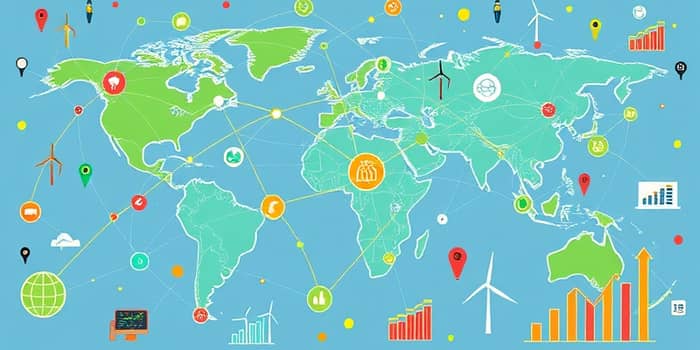
In an era of constant change, the ability to spot and harness market megatrends can define the success of investors and businesses alike. These deep, long-term structural shifts reshape entire landscapes, offering a beacon for strategic decision-making.
Megatrends are not fleeting fads but powerful forces that persist for decades. They influence everything from global growth to daily innovation. Their global scope and wide-ranging impact make them indispensable for forward-thinking strategies.
Understanding these trends helps in positioning portfolios and corporate bets effectively. Ignoring them can lead to missed opportunities and increased risks. This article provides a practical guide to identifying, analyzing, and capitalizing on these megatrends.
A megatrend is a profound, enduring shift in the global economy, society, technology, or environment. It is global in scope and hard to reverse. These shifts reshape growth, profitability, and risk premia across various industries.
For investors and strategists, megatrends drive what some call mega forces. These transform financial markets and economic structures. Missing a megatrend can mean investing in declining sectors.
It can also mean underestimating emerging leaders in new fields. Capturing megatrends is about long-term positioning, not short-term calls. They offer a framework for sustainable advantage in a volatile world.
Several recognized frameworks help categorize and analyze megatrends. These provide structured approaches to navigating complex trends. They highlight cross-cutting themes and disruptions that span decades.
The market context for 2026 and beyond is deeply intertwined with megatrends. These trends are baked into baseline return assumptions and concentration risks. They influence growth projections and equity performances.
Goldman Sachs expects global growth of around 2.8% in 2026, with the US outperforming. This is driven by factors like reduced tariff drag and easier financial conditions. J.P. Morgan forecasts double-digit gains in global equities, fueled by the AI supercycle.
BlackRock frames the outlook around mega forces such as AI and aging populations. These forces transform both the economy and financial markets. Understanding them is key to navigating future uncertainties.
To leverage megatrends, it's crucial to dive into specific areas with data and actionable insights. Here, we explore four pivotal megatrends shaping the future.
This megatrend addresses urgent global challenges with vast economic implications. Global carbon emissions hit record highs last year, driving investment needs.
Renewables generate about $1.5 trillion in annual revenue, signaling growth. Green finance is booming, with bonds expected near $1 trillion annually. Energy storage and smart grids are critical for integrating intermittent sources.
Investment angles focus on utilities shifting to renewables and equipment manufacturers. Transition risks involve stranded assets in fossil fuels. Proactive positioning can unlock significant returns in this space.
Population dynamics are reshaping labor markets and consumer demands. By 2030, around 265 million people will be aged 80 or older. This drives demand for healthcare and automation to compensate for shrinking workforces.
The Asia-Pacific silver economy is projected to reach $4.6 trillion by 2025. Technologies like telehealth and wearables support preventive care. Industrial automation is set to grow to $443 billion by 2035.
Market opportunities span healthcare, robotics, and consumer brands targeting older adults. Investors can focus on medtech and senior housing. Adapting to these shifts ensures relevance in evolving markets.
This trend moves from reactive treatment to proactive, personalized health. The wellness economy is on track to hit $9 trillion by 2028. Telemedicine is becoming a standard service in healthcare delivery.
AI-driven diagnostics and remote monitoring enhance preventive approaches. Wearables and health apps empower individuals to manage their well-being. This shift reduces long-term costs and improves outcomes.
Investment angles involve platforms for virtual care and wellness products. Focusing on mental health and fitness tech can tap into growing demand. Embracing this evolution fosters resilience in health sectors.
This megatrend revolves around interconnected technologies driving innovation. AI supercycles and data integration are transforming industries. Hyper-connectivity enables seamless global networks through 5G and IoT.
The data economy expands as more devices and systems become linked. This creates opportunities in cybersecurity and smart infrastructure. AI platforms lead to winner-takes-all dynamics in markets.
Investable areas cover tech giants, startups in automation, and digital identity solutions. Risks involve cyber threats and regulatory changes. Staying ahead requires continuous adaptation to tech advancements.
To capture the power of megatrends, adopt a structured approach that combines research with action. Start by monitoring multiple frameworks to identify overlapping trends.
Use data from sources like StartUs Insights and market reports. Focus on long-term horizons rather than short-term fluctuations. Diversify investments across sectors impacted by megatrends.
For businesses, align innovation bets with megatrend drivers like AI or demographics. Regularly review and adjust portfolios to stay aligned with structural changes. This proactive stance mitigates risks and maximizes opportunities.
Megatrends offer a powerful lens for navigating the complexities of modern markets. They provide a roadmap for future growth and innovation. By understanding and acting on these forces, investors and businesses can achieve sustainable success.
Embrace the journey of trendspotting with curiosity and diligence. The rewards of capturing megatrends extend beyond financial gains to societal impact. Start today by exploring the frameworks and data outlined here to chart your path forward.
References